
The Atacama Desert Project investigates how architecture and urban design can respond to the profound territorial transformations of the oldest and driest desert on Earth. Centered on the study of fragile water systems and ecosystems, the project examines the impacts of critical mineral extraction, renewable energy development, desertification, and climate change within a context of extreme territorial inequality and rich ancestral and cultural heritage. Through academic research, fieldwork, symposia, publications, exhibitions, and interdisciplinary exchange, the project explores how design can improve living conditions and strengthen the resilience of urban settlements across the Atacama Desert ecosystem.
The Atacama Desert Project is structured around five interrelated dimensions of study through which the research examines the complex relationships between water, territory, extraction, ecology, and urban settlements across the Atacama Desert ecosystem.

He is an architect, urbanist, educator, and researcher. He is Associate Professor of Architecture and Urbanism at Tulane University and Director of the Sustainable Urbanism Program. His work explores spatial design at the intersection of architecture and urbanism, addressing social, ecological, and territorial challenges.
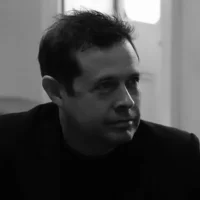
He is a Chilean architect, researcher, educator and cultural policymaker. He serves as Head of the Architecture Unit at Chile’s Ministry of Cultures, Arts, and Heritage and as Visiting Professor at Tulane University. His work spans research, practice, publications, and exhibitions.
Cristóbal Molina Baeza
Rubén García Rubio
Alex Cohen
Kate Burkhart
Camilla Greppi
Asha Hokanson
Max Kaplan
Emma Maass
Milagros Huang
Trinidad Justiniano Murillo
Ignacio Acosta
Marcos Zegers
The Atacama Desert in Chile is one of the world’s most arid and extreme inhabited territories and a critical site for the energy transition, given its vast reserves of strategic minerals such as copper and lithium. It also offers exceptional conditions for renewable energy production, agriculture, tourism, and atmospheric observation. Its river valleys —narrow corridors between the Andes and the Pacific Ocean— concentrate urban settlements, extractive and productive activities, and layers of cultural and industrial heritage, while also concentrating the effects of natural hazards intensified by climate change.
Within these valleys, water bodies operate as a paradoxical force shaping life, production, and risk: scarce yet intensely contested, indispensable to both ecosystems and economic activity, yet also capable of triggering destructive floods and transporting contaminated sediments. Through the study of the Atacama Desert ecosystem, with a different valley examined each year, students conduct field research, gather data, and produce cartographic
analyses. They translate hydro-political evidence into spatial propositions that seek to improve living conditions, reduce environmental risk, and generate public value. Through sustainable architecture and urban design, the academic work promotes territorial strategies of mitigation, compensation, and public reinvestment in response to extractive activities, with the aim of benefiting local communities.
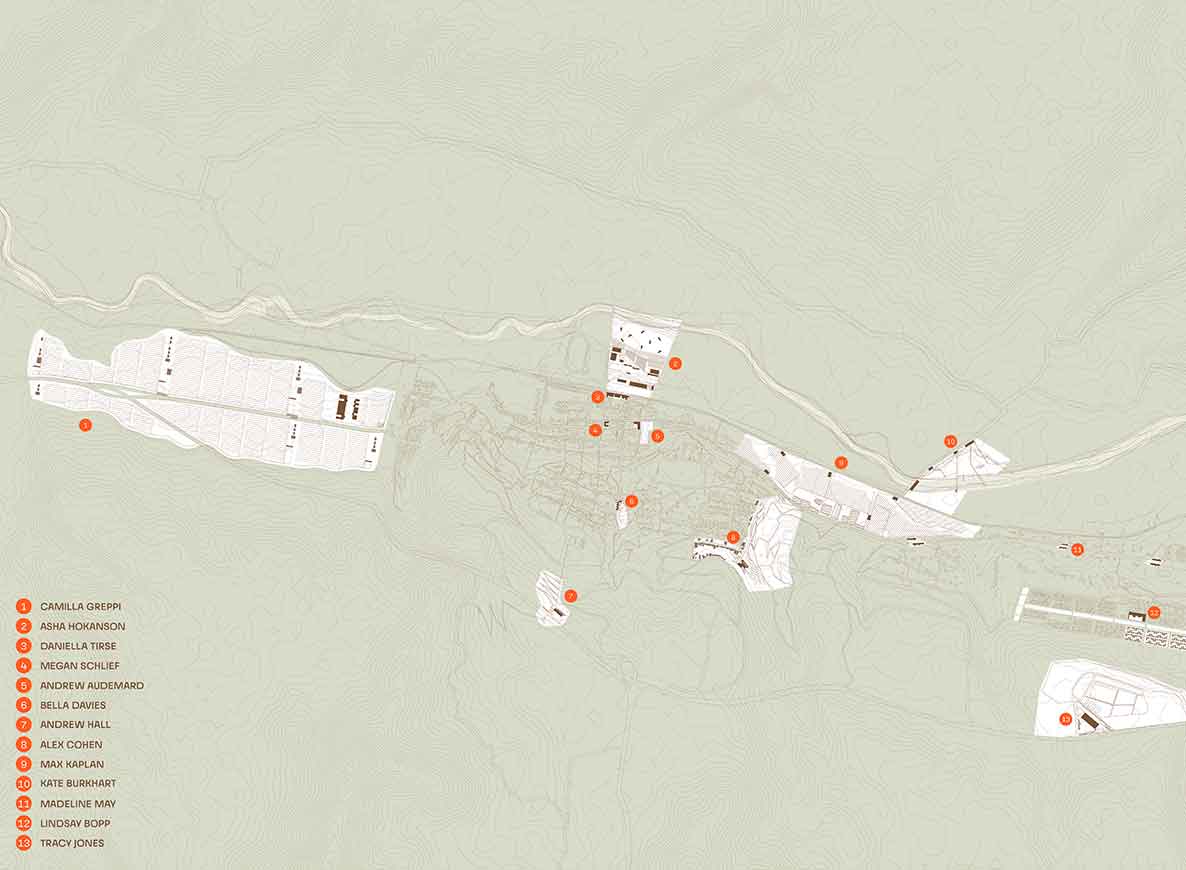
A master plan for the city of Freirina proposes a sustainable urban vision aimed at improving the conditions of this historic settlement in the Huasco Valley. Based on an integrated diagnosis, the project outlines strategies to strengthen the relationship between the city, the Huasco River, and the surrounding agricultural landscape, positioning the river as a central ecological and urban axis. The proposal includes the recovery of the front as public space, the integration of ecological corridors, risk mitigation measures, and the enhancement of cultural heritage and agricultural identity through new connections and revitalized urban spaces.
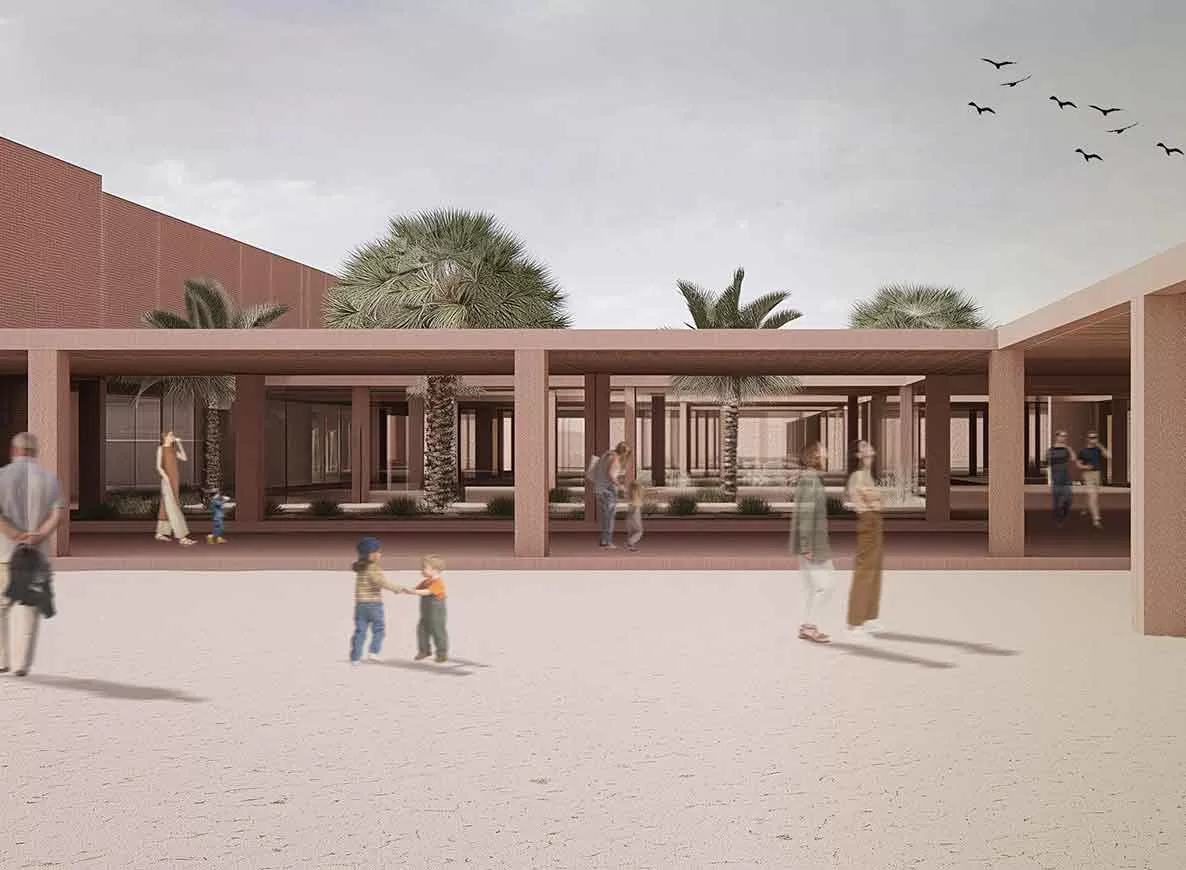
The Olive Study Center is conceived as a productive enclave that seeks to highlight the tradition of olive oil production while connecting it with community life and tourism. The project is organized into two parallel volumes, one for processing and the other for gathering, learning, and cultural exchange. Both structures are set within former olive fields and linked by transitional pathways that mediate between productive and public spaces, incorporating shaded courtyards and pauses that allow visitors to engage with and observe the different stages of olive oil production.
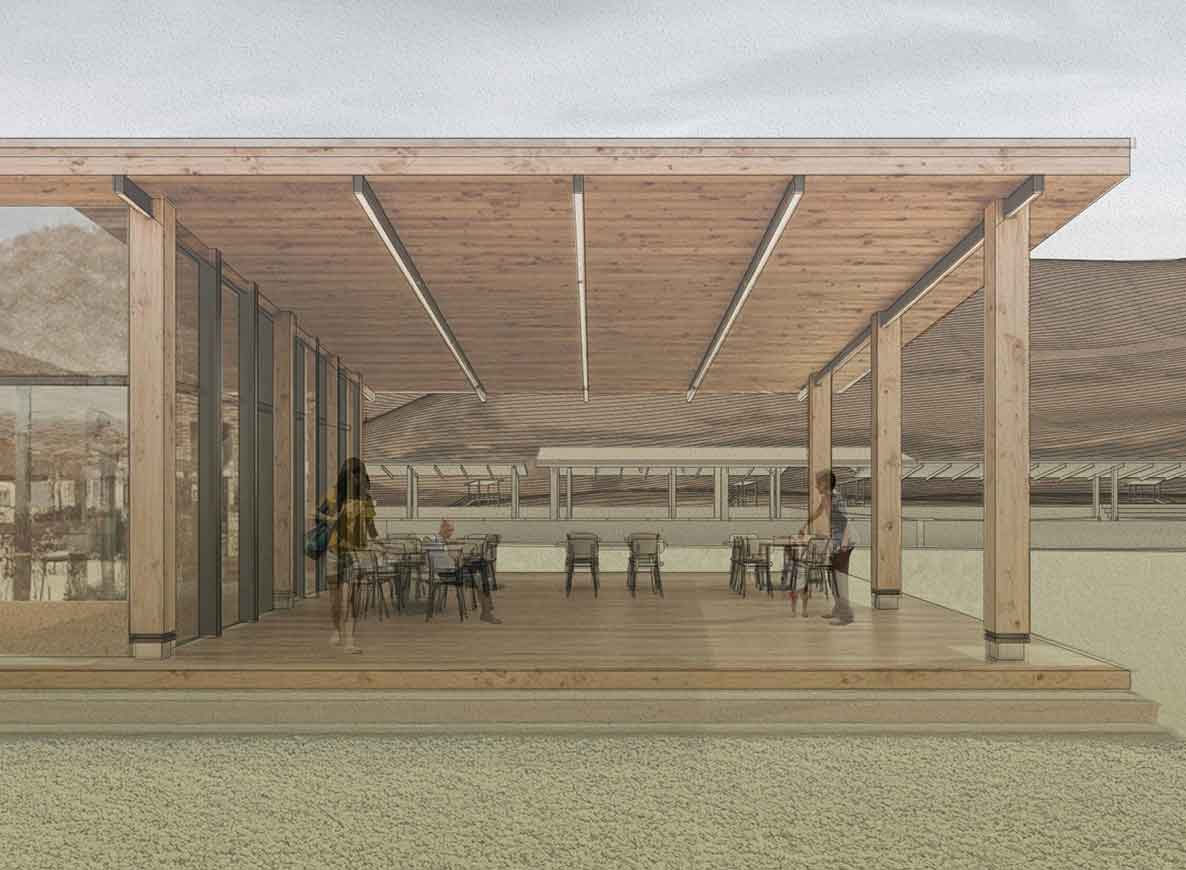
The Huasco River floodable park is conceived as a sustainable urban design project that seeks to reconnect the city of Freirina with the river, transforming its edge into a resilient public space that integrates recreation, ecology, and community life. Drawing on the valley’s agricultural history and hydrological dynamics, the proposal organizes spaces through landscape interventions that expand the floodplain, restore riparian ecosystems, and enhance biodiversity, while incorporating pedestrian and cycling paths that link urban and rural areas, shaping a continuous sequence of public spaces between city and landscape.
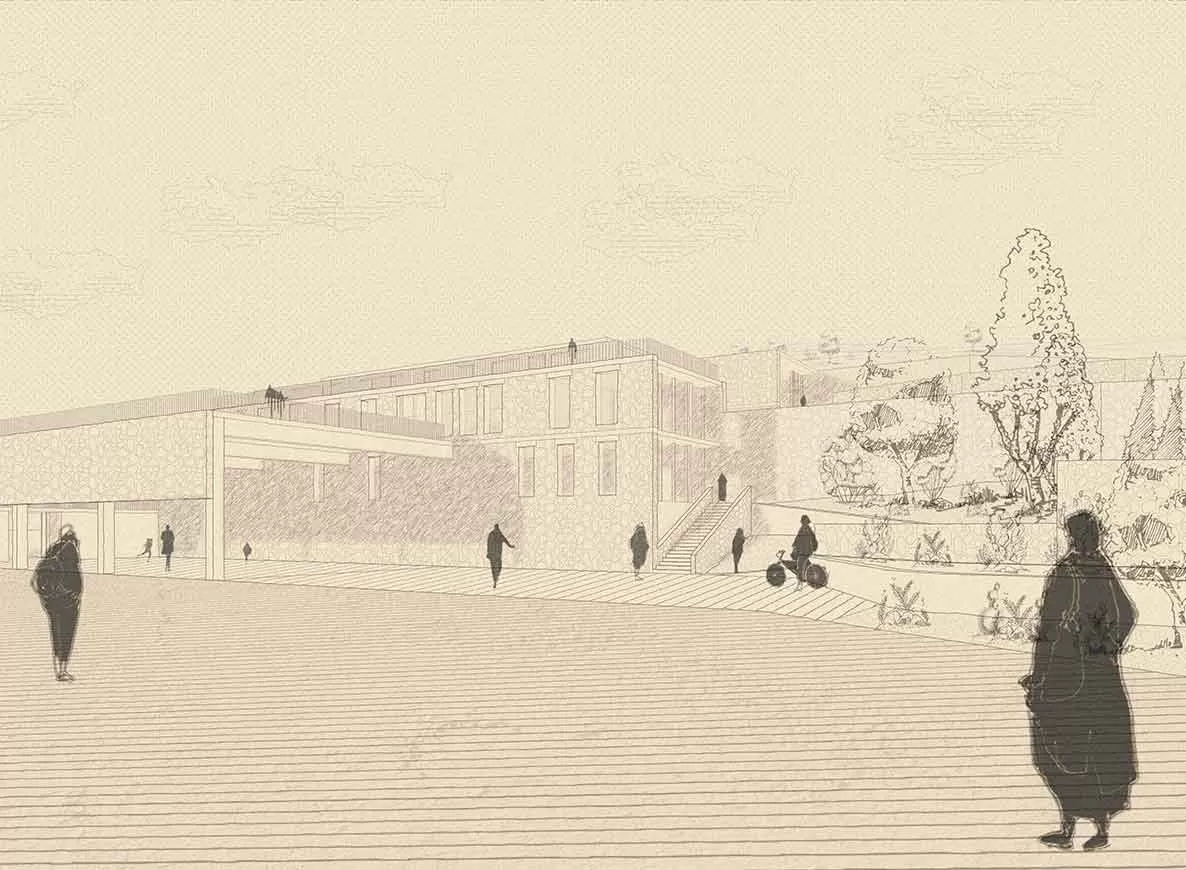
This project addresses the fragmented urban edges of Freirina, where steep ravines disrupt mobility and create vulnerable areas exposed to landslides and flooding. The proposal introduces a corridor of public spaces along the ravine edge that reinforces the urban boundary, stabilizes the terrain, and improves connections between consolidated neighborhoods and informal settlements. Through plazas, ramps, and viewpoints, the project integrates public space, circulation, and risk mitigation, culminating in a community center that supports social integration and provides educational, recreational, and sports infrastructure.
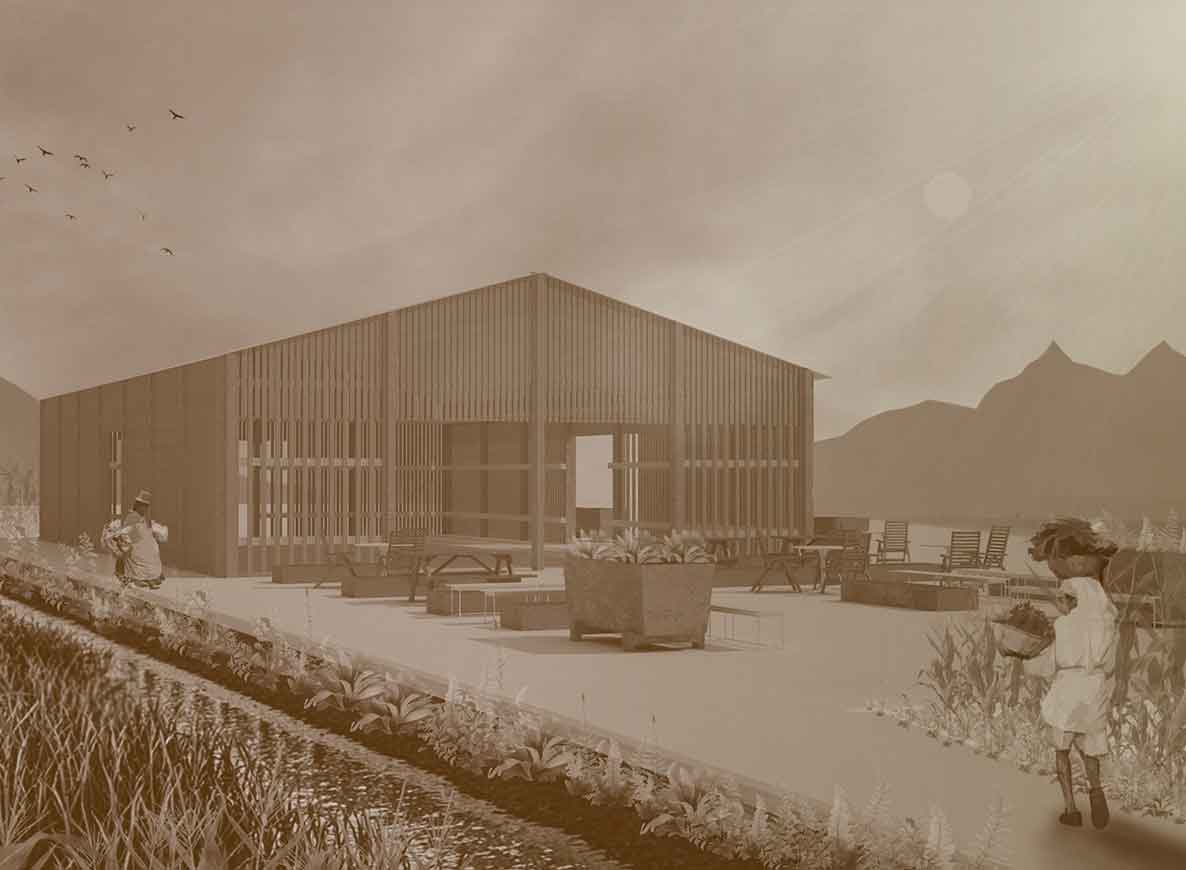
This project proposes a network of agricultural pavilions that reinterprets productive life under the extreme conditions of the Atacama Desert. Organized along the river, the system articulates spaces for different stages of agricultural production alongside educational and community programs. Each pavilion operates autonomously while forming part of a collective infrastructure adaptable to water cycles and climatic variations. Through elevated structures, pathways, and passive environmental strategies, the proposal integrates water management, learning, and production, promoting an adaptive agricultural model that strengthens local systems and connects landscape, tourism, and community life.
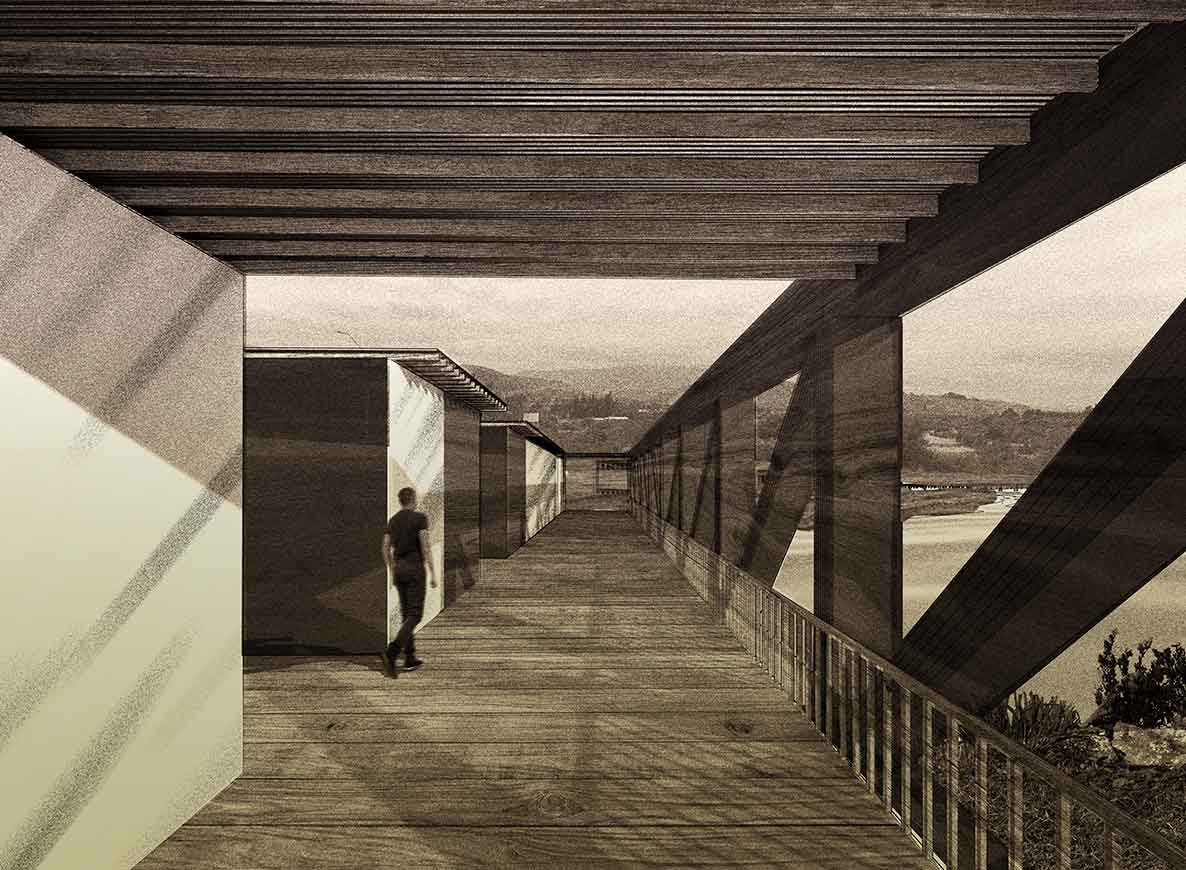
This project addresses flood risk along the Huasco River edge through the creation of a water park and a system of pavilions and walkways over wetlands, conceived as flexible structures capable of absorbing and redirecting water during flood events. The proposal functions as an ecological infrastructure that combines research, risk mitigation, and accessible public spaces. Elevated paths, a visitor center, and research pavilions support scientific study and environmental education while connecting the city with the fluvial ecosystem, fostering a resilient relationship between nature, knowledge, and community.
Rubén García Rubio is an architect, urbanist, educator, and researcher, currently Associate Professor at the Tulane School of Architecture and Built Environment, where he directs th Sustainable Urbanism program. His work examines the intersection of architecture and urbanism through historical and territorial perspectives, addressing contemporary ecological and spatial challenges. He is the author and editor of “Riverhood: A Geographic City Model” (Actar, forthcoming), “Dubai Forward” and “Dubai PopUp” (Maggiole Editore, 2020), and “ZAXXI” and “Subtract Architecture”
(Castile and Leon Institute of Architects Foundation), with contributions to The Plan Journal, ZARCH, Arts, and Ra (Revista de Arquitectura). His research has been exhibited by UN-Habitat and the Oslo Architecture Triennale. As co-founder of studioVRA, he leads a design practice recognized internationally for sustainable, site-specific architecture. He co-directs, with Cristóbal Molina Baeza, the Atacama Desert Project, an interdisciplinary initiative addressing urban issues, water, critical minerals, renewable energy, and cultural heritage in extreme environments.
Cristóbal Molina Baeza is an architect, researcher, editor, policymaker, and commissioner, currently Head of the Architecture Unit at the Ministry of Cultures, Arts, and Heritage of Chile and Visiting Professor at the Tulane School of Architecture and Built Environment. He holds a Ph.D. from ETSAB (Barcelona) and B.Arch and M.Arch degrees from Tulane University. His expertise spans architectural practice, cultural policy, and international curatorial projects. He has authored and edited several books, including “Jorge Elton Álamos: la cristalización de la naturaleza” (Ediciones ARQ, 2025);
“Winter: images of contemporary chilean architectura” (Arquine, 2020); “Alberto Piwonka Ovalle” (Ediciones ARQ, 2018), “Concursos de Arquitectura en Chile” (Publicaciones Cultura, 2014/2015), among others. Molina has commissioned Chile’s national pavilions at the Venice Architecture Biennale (2012–2025), codirected the XXII Chilean Architecture Biennial (2023). He co-directs, with Rubén García Rubio, the Atacama Desert Project, an interdisciplinary initiative addressing urban issues, water,critical minerals, renewable energy, and cultural heritage in extreme environments.
Registration
Welcome Remarks: Dean Iñaki Alday
Introduction: Rubén García Rubio and
Cristóbal Molina
Panel 1 (Water Heritages):
Cecilia Puga, Pilar Alliende and Orlando
Hernández Ying.
Moderator: Tony Pereira (SCLAS)
Panel 2 (Water Technologies):
Mariana Concha, Carlos Foxley and Ibrahim
Demir.
Moderator: Margarita Jover (TuSABE)
Panel 3 (Water Disputes):
Carolina Tohá and Eduardo Silva.
Moderator: Ludovico Feoli (CIPR)
Lunch
Panel 4 (Water Climates):
Priscilla Ulloa, Pedro Alonso and Annalisa Molini.
Moderator: Adam Marcus (CCU)
Epilogue / Afterword — Toward a
Shared
Vocabulary of Water Paradoxes
Tom Reese
Closing Remarks: Rubén García Rubio and Cristóbal Molina
Please complete the form to register for Water Paradoxes: The Atacama Desert as an Extreme Laboratory for Climate, Extraction, and Design.
Attend the Symposium. Join scholars, designers, policymakers, and experts for a cross-disciplinary conversation on water, extraction, climate change, and design in one of the world’s most extreme inhabited territories.
Saturday, April 11, 2026
9:30 AM – 3:30 PM
Richardson Memorial Hall, (Thomson Hall, Room 202) Tulane University
6823 St. Charles Avenue /
New Orleans, LA
United States of America
Tulane University is committed to providing universal access to all our events. Please contact the event organizer listed above for accessibility accommodations. Please note that advance notice is necessary to arrange some accessibility needs.
Tulane is an equal opportunity educator and employer. Legally protected demographic classifications such as race, national origin, sex, age, disability, veteran status, etc. are not relied upon as an eligibility or participation criteria for employment or educational programs or activities.